



Regenerative Medicine
Healthcare Investment


Stem cell therapy
Turn Back the Clock of Life: The Fountain of Youth
The Three Major Categories of Stem Cells
Three Types Of Stem Cells
Induced pluripotent stem cells (iPS cells)
Induced Pluripotent Stem Cells (iPS Cells)
In 2006, Professor Shinya Yamanaka’s team succeeded in creating stem cells for the first time in the world. These cells have the ability to differentiate into various types of tissue and organ cells and can proliferate almost indefinitely. By introducing specific genes, these cells can be restored to a pre-differentiated state.
By applying iPS cells to medicine, it is possible to create and transplant cells lost due to disease or injury from iPS cells, making regenerative medicine a promising reality.
Embryonic stem cells (ES cells)
The human body is composed of many cells, but these cells all originate from a single fertilized egg. ES cells are cells extracted from the first stage of a fertilized egg, known as a blastocyst. Like iPS cells, ES cells have the ability to differentiate into various tissue types and can proliferate almost indefinitely. ES cells possess capabilities similar to those of iPS cells, but because they do not carry the risk of becoming cancerous, they hold promise for medical treatments. However, the use of fertilized eggs to produce embryonic stem cells poses a challenge due to ethical concerns.
Mesenchymal stem cells are stem cells that can be isolated from tissues such as fat, bone marrow, and teeth, and can differentiate into fat, bone, and nerve cells. Unlike iPS cells and ES cells, these stem cells are derived from cells that have already differentiated to a certain extent, so their differentiation potential is limited.
Mesenchymal stem cells have been proven to be highly safe and are widely used in various medical applications both domestically and internationally. These stem cells are isolated from the patient’s own cells and can differentiate into osteocytes, chondrocytes, neurons, myocytes, and other cell types. Stem cell therapy is widely recognized as an effective treatment for a variety of diseases and is currently one of the most prominent fields in regenerative medicine.
Mesenchymal stem cells (MSCs)


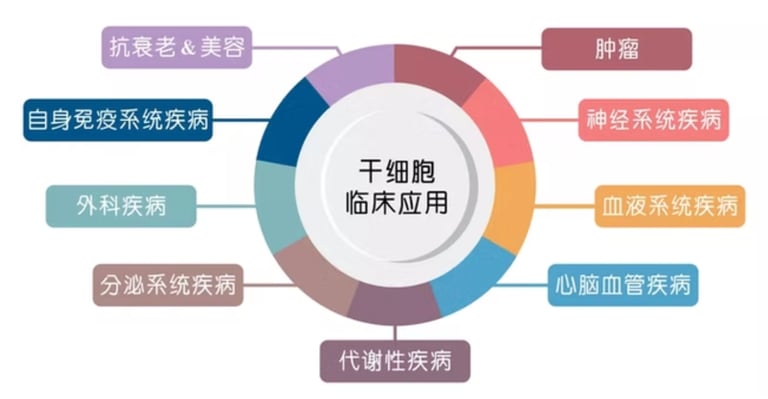
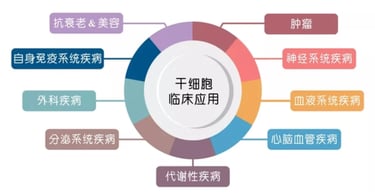
Clinical Applications of Stem Cells
Clinical Application Of Stem Cells
Induced Pluripotent Stem Cells (iPS Cells)
In 2006, Professor Shinya Yamanaka’s team succeeded in creating stem cells for the first time in the world. These cells have the ability to differentiate into various types of tissue and organ cells and can proliferate almost indefinitely. By introducing specific genes, these cells can be restored to a pre-differentiated state.
By applying iPS cells to medicine, it is possible to create and transplant cells lost due to disease or injury from iPS cells, making regenerative medicine a promising reality.
Stem Cell Cultivation Process
Stem Cell Cultivation Process
Induced pluripotent stem cells (iPS cells)
Embryonic stem cells (ES cells)
Mesenchymal stem cells (MSCs)
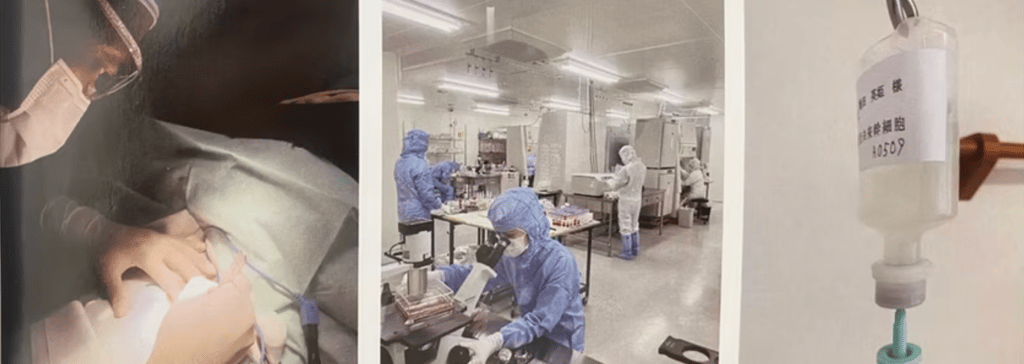
Stem Cell Treatment Process
Treatment algorithm
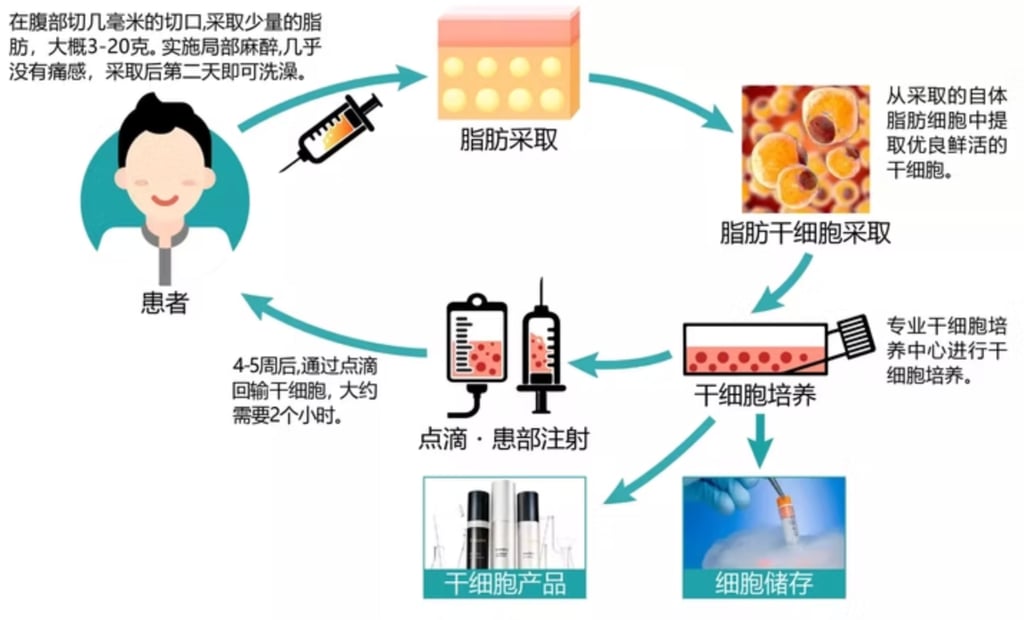
The treatment uses stem cells extracted from the patient’s own fat, such as from the abdomen. The extracted fat is separated, purified, cultured, and expanded to create a fibroblast precursor cell suspension, which is then reinfused into the bloodstream, the affected area, or subcutaneously to treat diseases and achieve cosmetic anti-aging effects.